A Collaborative Civic Process
-
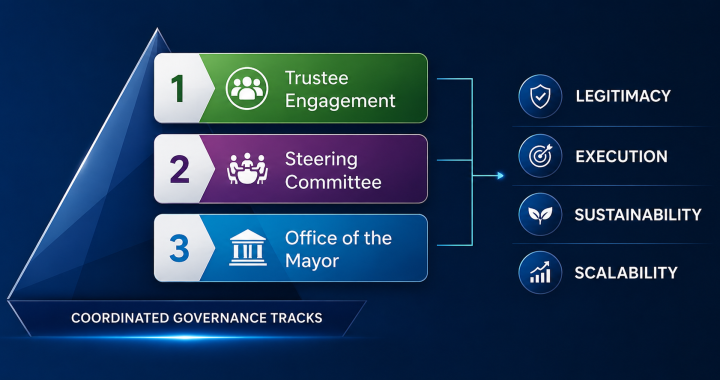
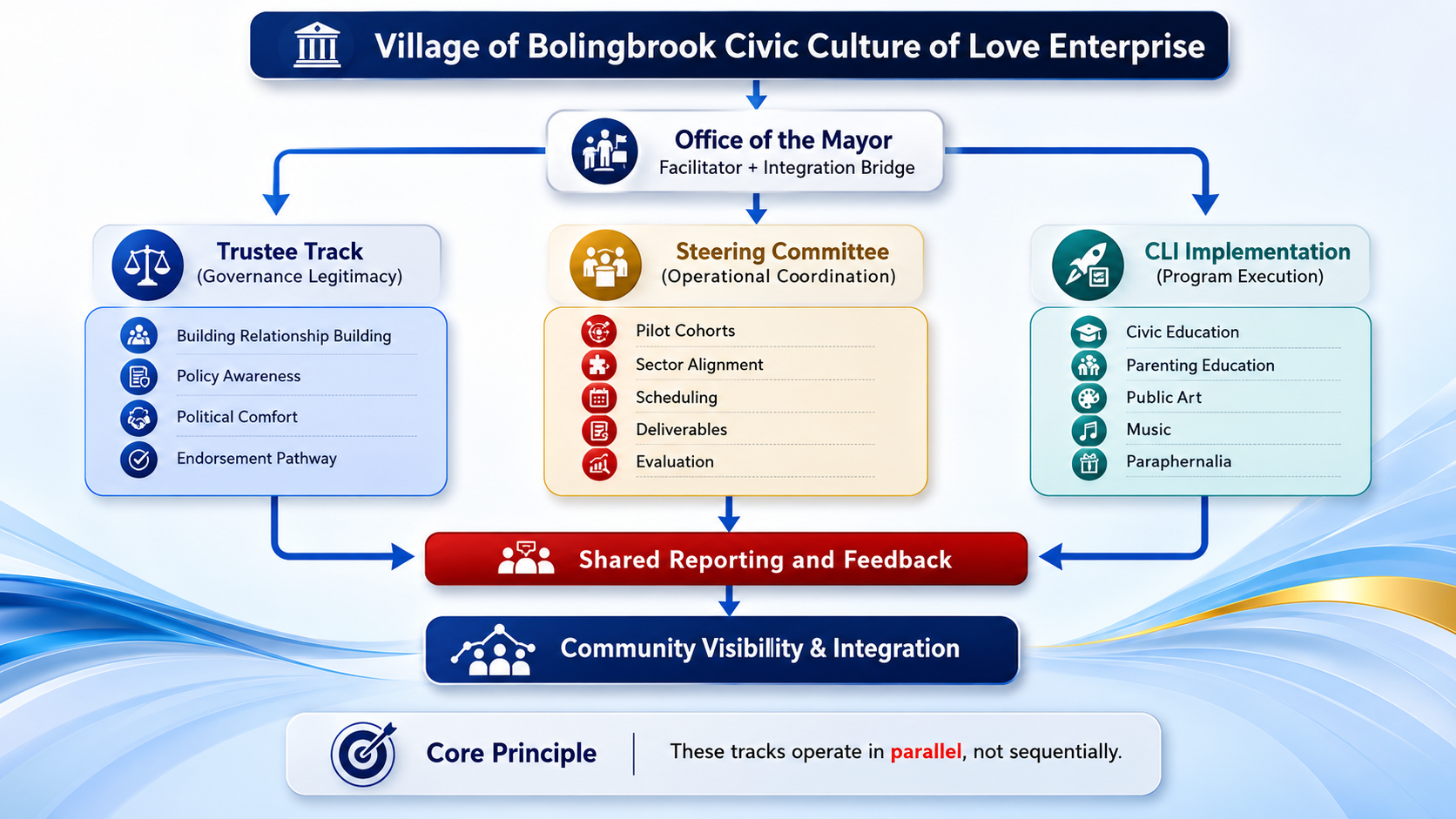
Trustee Engagement (Governance Legitimacy)
CLI recognizes the importance of relationship-building, transparency, governance alignment, and institutional trust within civic development initiatives. Trustee engagement functions as a pathway for dialogue, structured briefings, collaborative understanding, and governance awareness. -
Steering Committee (Operational Coordination)
CLI utilizes collaborative Steering Committee structures as community-centered implementation environments that bring together diverse sector voices, perspectives, and expertise — supporting operational coordination, community participation, sector alignment, and ongoing evaluation. -
Mayor's Office (Integration & Civic Alignment)
CLI recognizes the important integrative role municipal leadership can play in helping support communication, institutional alignment, civic legitimacy, and relationship-building between governance structures and community participation processes.
Parallel Pathways for Collaborative Civic Formation
CLI believes effective community formation initiatives require governance legitimacy, operational coordination, and civic integration to function simultaneously rather than sequentially.
By advancing these pathways in parallel, community initiatives are able to:
- Build Trust Gradually
- Strengthen Collaborative Participation
- Maintain Institutional Transparency
- Evaluate Implementation Responsibly
- Expand through Demonstrated Value and Community Confidence
Four Systemic Civic Formation Drivers
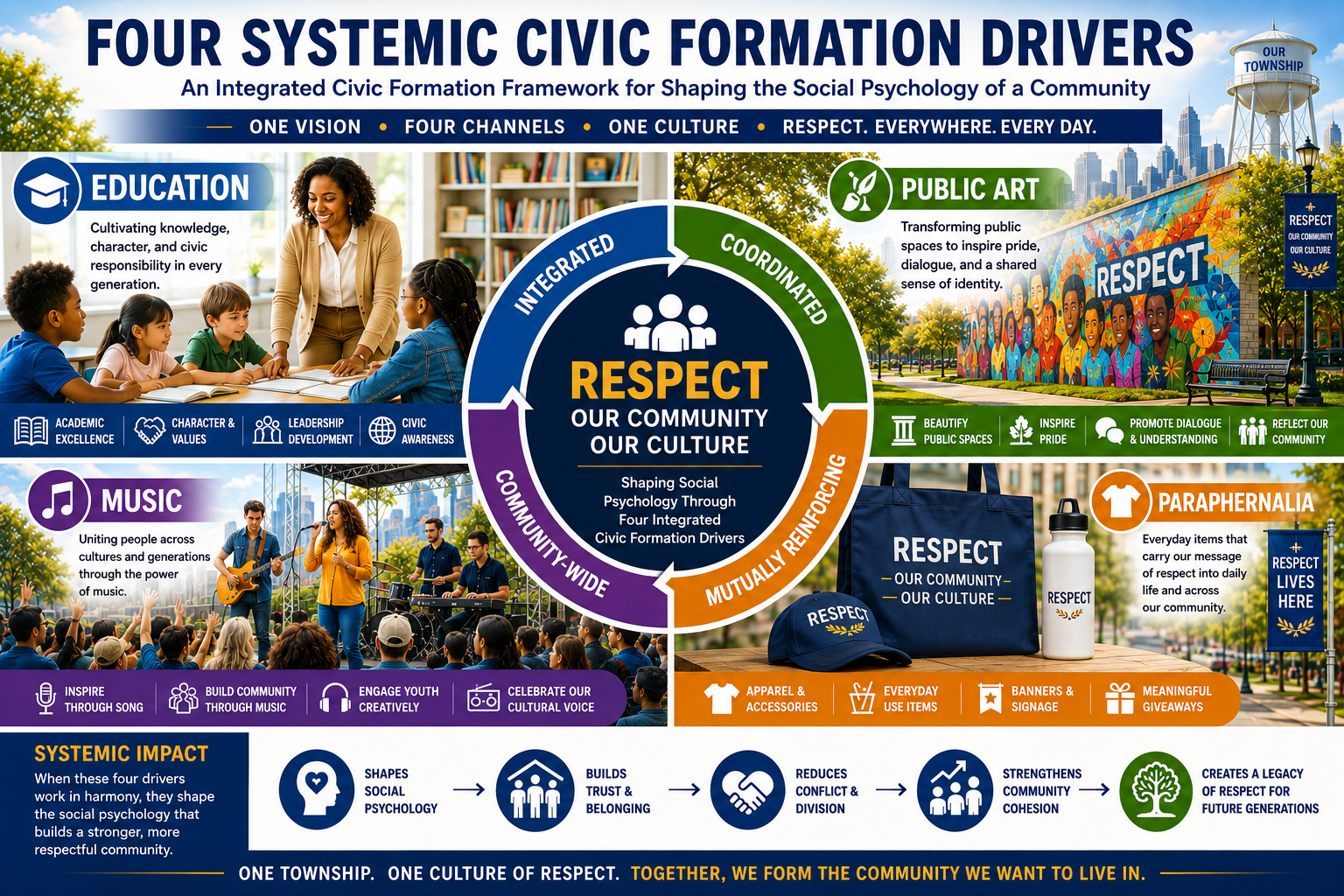
The Flagship Framework of Chicago Lights Institute's Civic Formation Engineering
The Four Systemic Civic Formation Drivers are the signature framework of Chicago Lights Institute's Civic Formation Engineering. They represent an integrated system of education, public art, music, and paraphernalia designed to work together—not as separate programs, but as mutually reinforcing civic drivers that intentionally shape the social psychology, identity, culture, and everyday life of a community.